Evaluating sources
Primary vs secondary sources

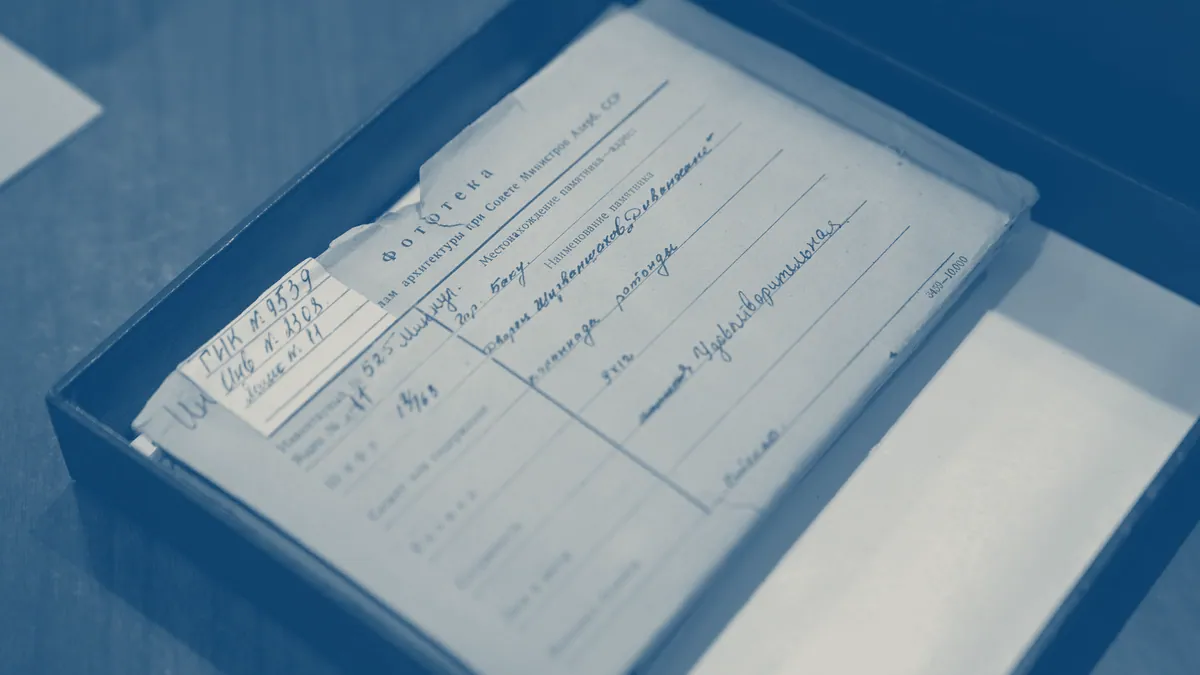
A primary source is a record created by someone with direct access to the event, object, person or data it describes, made at or near the time and before anyone has interpreted it for a reader. A secondary source is one step further out: it describes, analyzes or argues about primary material that it did not itself witness or generate. The difference is not about quality or age. It is about distance from the thing being claimed.
What makes a source primary: access, and the moment it was made
A source becomes primary through two properties, and it needs both. The first is direct access: the maker was there, held the object, ran the instrument, or was the person concerned. The second is proximity in time: the record was made before memory and later events had a chance to reshape it.
Primary sources include a ship's log, a factory's wage book, a household inventory, an excavation report, an interview recording, a photograph, a lab notebook, a census return, a company's own annual filing, and the raw data file behind a chart. Each of them is evidence of something rather than an argument about it.
Secondary sources include a monograph on the shipping trade, a review article that pools twenty experiments, a documentary, a textbook chapter, a newspaper feature written from other people's reporting, and an encyclopedia entry. Each of them is somebody's reading of primary material, and each of them can be excellent. Secondary does not mean second rate. A historian who has spent a decade in an archive is a far better guide to that archive than an untrained reader with one afternoon in it.
Tertiary sources are a third layer that indexes and condenses the other two: bibliographies, catalogs, dictionaries, handbooks and most general reference sites. Their proper use is navigation. A tertiary source tells you what exists and where; it is not the thing you cite for the claim itself.
Primary source and secondary source compared, with the difference that matters
The table sets the three types side by side on the four properties that decide how you use them.
| Property | Primary source | Secondary source | Tertiary source |
|---|---|---|---|
| Relation to the event | Made by a participant, witness or instrument | Written by someone working from primary material | Compiled from secondary material |
| Examples | Letters, ledgers, minutes, field notes, datasets, photographs, artifacts | Monographs, review articles, biographies, documentaries, most journalism | Encyclopedias, bibliographies, catalogs, textbooks at survey level |
| What it is good for | Establishing what was recorded, by whom, when | Context, synthesis, weighing competing accounts | Finding out what exists and where to look next |
| Main risk | The maker had a position, a purpose and a blind spot, and no notes explaining either | Selection: which primaries were used and which were left out | Compression: the qualification that mattered was the first thing cut |
The single most useful line in that table is the last one. A primary source is not neutral and never was. A ledger records what the firm chose to record, in the categories it found convenient, for the people who would audit it. Treating a primary source as raw truth is the standard beginner error, and it is exactly as damaging as ignoring primary sources altogether.
Why the same document is primary for one question and secondary for another
The same document changes category when the question changes, which is why a fixed list of primary sources is misleading. Category is a relation between a document and a question, not a label stamped on the paper.
Take a 1955 newspaper article reporting a bridge collapse that happened the week before. For the question "what caused the collapse", it is a secondary source: the reporter was not there when it fell and is relaying an engineer's account. For the question "how was the collapse explained to the public in 1955", the same article is a primary source, and close to the best one available. Nothing about the paper changed. The question moved.
This is also how a review article behaves in research. A systematic review of thirty trials is secondary evidence about the effect being studied and primary evidence about how that field defined its terms in the year the review was written. Deciding which you are using is not pedantry, because the two readings support completely different claims.
Why primary sources are important in the study of history and in research
Primary sources are important because every layer of interpretation between you and the evidence is a place where something can be dropped, and because interpretations compound. A textbook cites a monograph, the monograph cites an article, the article cites a report, and the report cites a survey whose sample was 40 people in one town. Nothing in that chain is dishonest. The qualification simply falls off, one citation at a time, until a local finding is presented as a general fact.
Historians work from primary material for a further reason: the questions worth asking are usually questions the secondary literature did not ask. A parish register was kept to record baptisms, and it will also tell you about literacy, occupation, migration and naming custom, none of which the clerk had in mind. Secondary sources can only answer questions someone already thought to ask of the archive.
In research the same logic produces a specific habit. When a paper makes a claim and cites reference 14, read reference 14. Roughly one time in several the cited work says something narrower than the citing sentence, or says it about a different population, or was itself a call for research rather than a finding. This is not fraud and it does not require a conspiracy to explain. It requires only that people cite from memory, which everyone does.
Confirmation bias is the reason this asymmetry never corrects itself on its own. A chain that ends where you expected feels checked, and the checking stops there. The chains readers actually follow to the bottom are the ones that surprised them.
How to find primary sources
To find primary sources, start with the catalog rather than the search box, because primary material is organized by provenance and not by subject. Six routes cover most needs.
- Search a national archive such as The National Archives at Kew or the Library of Congress, both of which have large digitized holdings and finding aids that explain what each collection contains.
- Use an aggregator such as Europeana for European cultural collections, HathiTrust for digitized books and serials, or Chronicling America for historic newspapers.
- Ask a library. A university library's special collections desk and its subscription databases reach material that is not on the open web, and an academic librarian will identify the right collection faster than an afternoon of searching.
- Follow the footnotes of the best secondary work you can find. A good monograph's bibliography is a map of the primary sources on that subject, assembled by someone who spent years making it.
- Resolve the digital object identifier when the primary source is a study rather than a document. The identifier takes you to the paper itself, and increasingly to the deposited dataset behind it.
- Check the repository named in a paper's data availability statement, which is where the actual measurements live if they were shared at all.
Where the primary source is a research paper, whether it passed through refereeing is a separate question with its own answer, set out on Peer review. A worksheet that walks a source through credibility, reliability and relevance sits on Evaluating sources, and applies to primary and secondary material alike.
How to trace a claim back to its primary source in five steps
To trace a claim back to its primary source, work backwards through the chain one link at a time and refuse to skip.
- Write the claim down exactly as you met it, including every number and qualifier.
- Identify the immediate source: the article, post or page in front of you, and its date.
- Find what it cites, following the link, the footnote or the named institution. If it cites nothing, that is your answer and the trace ends here.
- Repeat until the source stops citing and starts reporting: a dataset, a document, a transcript, an experiment.
- Compare the two ends. Read the primary's own statement of what it found, then reread the claim you started with, and note every difference.
That last comparison is the whole exercise, and it is where the surprises are. The step by step account of how a finding gets reshaped between a paper and a headline is on Media literacy.
The test to carry away is one question, asked before you accept any confident summary: if I followed this claim back three links, what would I expect to find at the bottom, and am I willing to be wrong about that? Predict first, then look. The gap between what you predicted and what is actually there is the most honest measure of a source you will ever get.
Where to go next
A better question is a good next step.
Put it into practice